Welcome to WordPress. This is your first post. Edit or delete it, then start writing!
Author: admin
-
Haldi (Turmeric) Benefits: What This Golden Spice Really Does

Haldi is one of those things every Indian home just trusts. A pinch goes into the food, a spoon goes into warm milk when someone’s unwell, and it turns up in skincare and remedies passed down for generations. But what does haldi actually do? Here’s an honest, no-hype look at the benefits — what’s real, and how to actually get them.
What makes haldi special: curcumin
Most of haldi’s reputation comes down to one natural compound: curcumin. It’s what gives turmeric its golden colour, and it’s the part that’s been studied the most for its antioxidant and anti-inflammatory properties. When people talk about the “benefits of haldi,” curcumin is usually the reason. If you want the full background on the spice itself, see our haldi powder guide
Traditionally valued for inflammation and joints
Haldi has long been used in Indian homes for aches, stiffness, and everyday inflammation — which is why it turns up in so many home remedies for joints. Curcumin’s anti-inflammatory nature is the reason behind this old wisdom. It’s not a painkiller and not a cure, but it’s a gentle, everyday support that generations have relied on.
The immunity connection — haldi doodh
The classic haldi doodh (turmeric milk, or “golden milk”) is the most familiar way Indians use turmeric for wellbeing. Warm milk with a little haldi is the go-to at the first sign of a cold or a rough day. It’s comforting, and it’s how most of us first met turmeric outside of food.

Good for the skin, traditionally
Long before it was a trend, haldi was part of Indian skincare — in ubtan before weddings, in home face packs, in remedies for a clearer, calmer complexion. Nothing miraculous, but its long history in skincare is exactly why it’s still used this way today.
Antioxidant support and digestion
As an antioxidant, haldi helps the body deal with everyday wear and tear, and it’s traditionally considered good for digestion too. You’re never eating it in large amounts, but a little in your daily food, day after day, quietly adds up — which is the honest way to think about most everyday spices.
How to actually get the benefits
Two simple things make a real difference:
- Pair it with black pepper. A pinch of pepper helps your body absorb curcumin far better — which is why so many traditional recipes naturally combine the two.
- Use haldi that’s actually haldi. Old, dull, or adulterated turmeric gives you the colour but little of the goodness. Freshly ground, pure haldi is what carries real curcumin — and if you want to be sure yours is genuine, here’s how to check if your haldi is pure
Frequently Asked Questions
What are the main benefits of haldi?Haldi is traditionally valued for its anti-inflammatory and antioxidant curcumin, for immunity (haldi doodh), for skin, and for digestion. It’s a wholesome everyday spice, not a medicine.
Is haldi doodh actually good for you?As a warm, comforting drink with turmeric’s natural goodness, it’s a long-loved home remedy. It’s best seen as everyday support, not a cure for illness.
Does the quality of haldi affect its benefits?Yes. The benefits come mainly from curcumin, which lives in real, freshly ground turmeric. Dull, old, or adulterated haldi gives you colour but little of the actual goodness.
How can I get more benefit from turmeric?Pair it with a pinch of black pepper, which helps your body absorb curcumin, and use pure, freshly ground haldi rather than an old packet.
Want haldi with real colour and real goodness — freshly ground and honestly made? Chat with us on WhatsApp for pure haldi and bulk orders.
Milawat se door, swaad se bharpoor.
-
Haldi Powder (Turmeric): Meaning, Uses, Benefits & Complete Guide

Haldi is probably the most Indian spice there is. It’s in almost every sabzi and dal, it turns up in home remedies, in haldi doodh, even in weddings. Yet for something we use every single day, most of us have never really thought about what haldi powder is or what separates a good one from a dull, lifeless packet. Here’s a simple, complete guide.
What is haldi powder (turmeric)?
Haldi powder is dried turmeric root, ground into a fine powder. “Haldi” is the Hindi name and “turmeric” is the English one — so if a recipe says turmeric powder and your dabba says haldi, they’re the same thing. It gives food its warm golden colour and an earthy, slightly bitter flavour that sits underneath almost every Indian dish.
The colour comes from a natural compound called curcumin, which is also the reason turmeric is so valued beyond the kitchen. In a good haldi, that colour is deep but natural — never neon.
How haldi powder is made
The honest process is simple: clean, dried turmeric roots are sorted, then ground into a fine powder and packed. Nothing needs to be added for colour or weight. Because turmeric’s aroma and its natural oils sit inside the root, freshly ground haldi is far richer than a powder that’s been sitting on a shelf for months. This is the same reason we grind fresh in small batches at Gamak — so the colour and warmth reach your kitchen the way they should.

How to use haldi in cooking
Haldi is a base spice, added early so it can cook into the dish rather than sit on top of it. A few everyday uses:
- Added to hot oil or the onion-tomato base at the start of a sabzi or gravy.
- A pinch in dal while it boils, for colour and warmth.
- In marinades for vegetables, paneer, or non-veg, where it also helps with smell.
- Just a small amount is enough — too much turns a dish bitter, so haldi is about restraint.
Haldi beyond the kitchen
This is where haldi is different from most spices. For generations it’s been part of Indian home life well outside cooking — haldi doodh at night, haldi in skincare and ubtan, and its place in traditional remedies. None of this is magic, but it’s why haldi holds a spot in Indian homes that few other spices do.
The health side of haldi
Turmeric’s curcumin has been studied for its antioxidant and anti-inflammatory properties, and haldi has long been valued in Indian households for exactly these reasons. It’s not a medicine and it’s not a cure — it’s simply a wholesome everyday spice that quietly does more than add colour. We’ve covered this in detail in our health benefits of haldi post.
How to tell if your haldi is pure
Haldi is one of the more commonly adulterated spices, usually with cheaper powders or added colour to make it look brighter. The good news is you can check at home — a simple turmeric-in-water test tells you a lot. We’ve laid out the easy home tests here: how to check if your haldi is pure
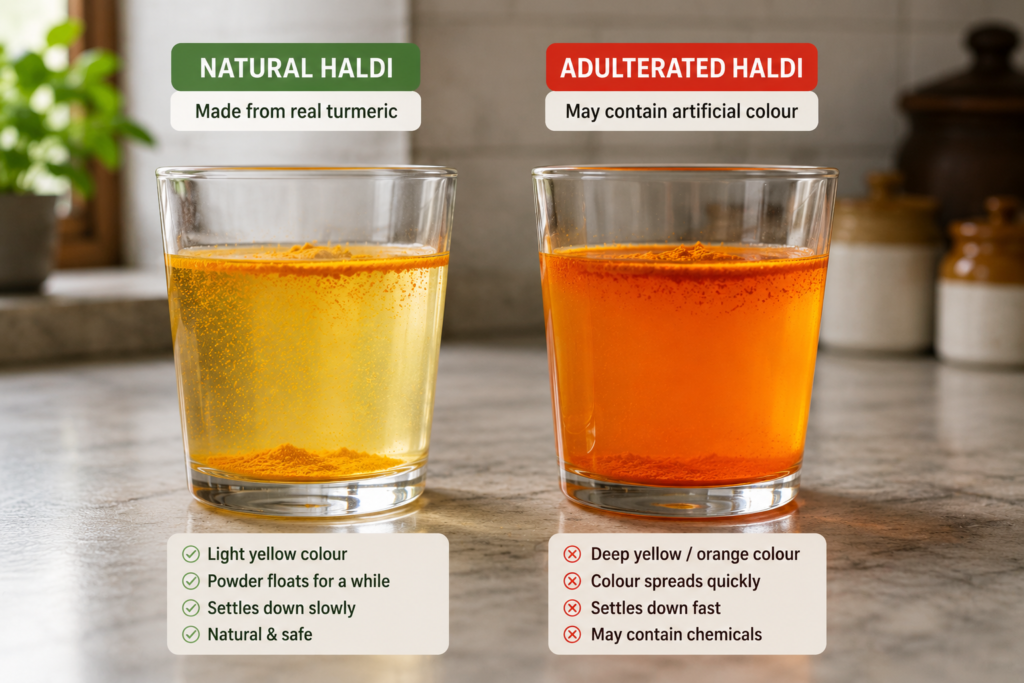
The short version: real haldi is a natural, slightly muted gold — not a harsh, glowing orange — and it settles softly in water instead of bleeding colour instantly.
How to store haldi powder
Keep it in an airtight container, away from heat, moisture, and direct sunlight, and buy in amounts you’ll finish in a few weeks. Ground turmeric holds its colour longer than its aroma, so fresher is always better if you want the full flavour, not just the colour.
Frequently Asked Questions
Is haldi and turmeric the same thing?Yes — haldi is the Hindi name and turmeric is the English name for the same spice, made from dried turmeric root.
Is haldi powder made from a root or a seed?From the dried root (rhizome) of the turmeric plant, ground into powder — not a seed.
Why is some haldi brighter than others?Natural haldi has a deep but muted gold colour. A very bright, uniform orange can be a sign that colour was added, so brighter isn’t better.
How much haldi should I use in cooking?Just a small pinch to half a teaspoon for most dishes. Too much makes food bitter — haldi works best in restraint.
Want haldi that’s a natural gold, not a fake glow — freshly ground and honestly made? Chat with us on WhatsApp for pure haldi and bulk orders.
Milawat se door, swaad se bharpoor.
-
Coriander Powder vs Coriander Seeds: What’s the Difference?

Coriander shows up in an Indian kitchen in two forms — whole seeds (sabut dhania) and the ground powder (dhania powder). They come from the same plant, but they behave differently in cooking, and knowing when to use which makes a real difference. Here’s the simple version.
The basic difference
Coriander seeds are the whole, dried seeds of the coriander plant. Coriander powder is just those same seeds, ground fine. That’s the only real difference in what they are — everything else comes down to how that changes their flavour and how you use them. For a full breakdown of the spice itself, see our coriander powder guide
The flavour and aroma difference
This is the part that matters. A whole coriander seed keeps its aroma locked inside, protected, until it’s crushed or ground. The moment you grind it, the natural oils release — which is why fresh powder smells strong and a whole seed smells mild until you break it.
So seeds hold their flavour longer, and powder delivers it faster. Neither is “better” — they’re just built for different jobs.

When to use whole coriander seeds
Reach for whole seeds when you want texture or a slow release of flavour:
- In a tadka or tempering, where they crackle in hot oil and release aroma gradually.
- In slow-cooked dishes and pickles, where they can sit and infuse over time.
- Lightly dry-roasted and then coarsely crushed, for a deeper, nuttier flavour.
When to use coriander powder
Reach for the powder when you want the flavour to blend in evenly and quickly:
- In everyday gravies and sabzis, added with the masala base.
- In marinades, where it mixes smoothly into curd or paste.
- In spice blends and masalas, where a fine, even texture matters.
If you want the full detail on this, we’ve written a separate post on how to use coriander powder in cooking
Freshness: why powder needs more care
Here’s the trade-off. Whole seeds can sit in your dabba for a year and stay fine, because their aroma is still sealed inside. Powder can’t — once ground, it slowly loses its flavour with every passing week. That’s why the freshness of your coriander powder matters far more than the freshness of your seeds, and why freshly ground dhania — like the small batches we grind at Gamak — tastes so much stronger than an old packet.
Can you swap one for the other?
Yes, with a little sense. If a recipe calls for powder and you only have seeds, dry-roast the seeds lightly and grind them fresh — you’ll actually get a better result. Going the other way, powder can stand in for seeds in most cooked dishes, though you’ll lose the texture and the slow tempering effect.
Frequently Asked Questions
Are coriander seeds and coriander powder the same?They come from the same plant — powder is simply ground coriander seeds. The difference is in texture, aroma, and how you use them.
Which lasts longer, coriander seeds or powder?Whole seeds last much longer because their aroma stays sealed inside. Ground powder slowly loses its flavour, so it’s best used fresh.
Can I grind coriander seeds into powder at home?Yes — lightly dry-roast the seeds, then grind them fresh. This gives a stronger aroma than a packet that’s been sitting for months.
Want the convenience of powder without losing the aroma of fresh seeds? Chat with us on WhatsApp ← for freshly ground dhania and bulk orders.
Milawat se door, swaad se bharpoor.
-
How to Use Coriander Powder in Everyday Cooking

Coriander powder — dhania — is one of those spices almost every Indian dish quietly leans on. But because it’s so common, most of us just throw it in without thinking about when or how much. Used well, it does a lot; used carelessly, it disappears. Here’s how to actually get the most out of it.
Where coriander powder fits in a dish
Coriander powder is a base spice, not a finishing one. It’s meant to be cooked into the dish early, along with the masala, so its warm, mild flavour spreads through everything rather than sitting on top. If you’ve ever added it right at the end and wondered why it tasted raw and dusty, that’s why — it needs heat and time to open up.
If you’re not sure what coriander powder actually is to begin with, our coriander powder guide covers the basics.
Everyday ways to use it
- In gravies: add it to the onion-tomato base and let it cook for a minute or two before the water goes in.
- In dry sabzis: a spoon along with the tadka gives warmth without heat.
- In dals: a small amount while it simmers rounds off the flavour.
- In marinades: mixed with curd, it adds body to paneer, vegetables, or non-veg.
- In snacks and chaats: a pinch of roasted coriander powder lifts the whole thing.

How much to use
Coriander powder is forgiving, but balance matters. For most dishes serving three to four people, half a teaspoon to a full teaspoon is plenty. Because it’s mild, it’s often used in slightly larger amounts than sharper spices — it builds a base rather than a punch. When in doubt, start light; you can always add more, but you can’t take it out.
A simple tip: let it cook
The single biggest thing people get wrong is not cooking it long enough. Give coriander powder at least a minute in hot oil or masala before adding liquid. This small step turns it from a dusty raw taste into a warm, rounded flavour. Some cooks also lightly roast coriander seeds and grind them fresh for an even deeper aroma.
Coriander powder in homemade blends
Coriander is a backbone of most homemade masalas — garam masala, sambhar powder, chaat masala and more all rely on it to hold the sharper spices together. If you grind your own blends, a good, fresh coriander powder makes a noticeable difference to the final result.
Freshness makes the difference
All of this only works if the powder actually has flavour. A dull, old, or stretched packet gives you the colour and none of the warmth. This is why freshly ground dhania matters — and why we grind ours in small batches at Gamak, so it still smells alive when it reaches your kitchen.
Frequently Asked Questions
When should I add coriander powder while cooking?Early — with the masala base — so it cooks into the dish. Adding it at the very end leaves a raw, dusty taste.
How much coriander powder should I use?About half to one teaspoon for a dish serving three to four people. It’s mild, so it’s usually used a little more generously than sharper spices.
Can I use coriander powder instead of coriander seeds?Yes, in most cooked dishes. The powder blends in faster; seeds are better when you want texture or a tempering. You can also grind seeds fresh for a stronger aroma.
Want dhania powder that actually adds flavour, not just colour? Chat with us on WhatsApp for pure, freshly ground masala.
Milawat se door, swaad se bharpoor.
-
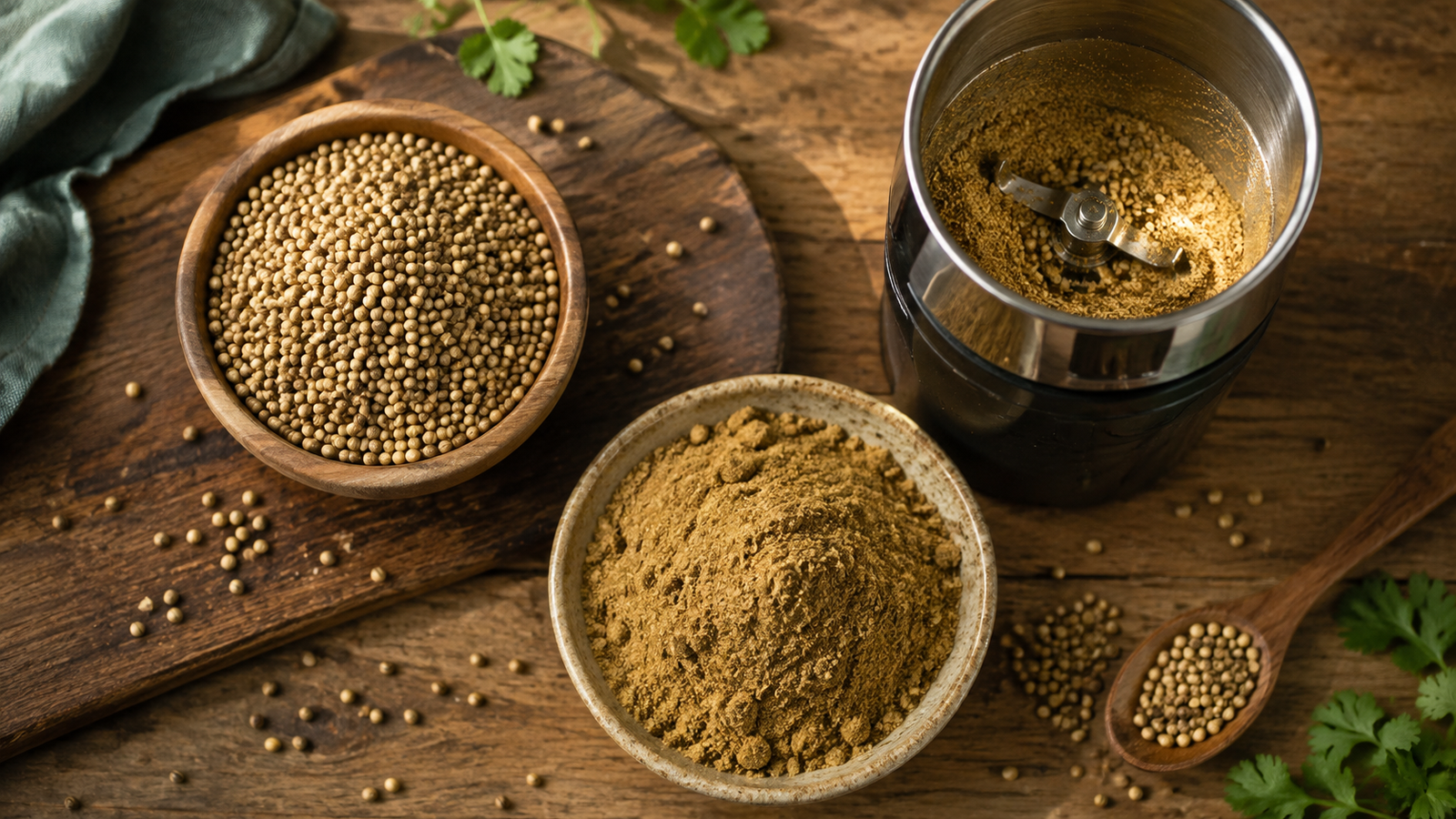
How to Make Coriander Powder (Dhania) at Home
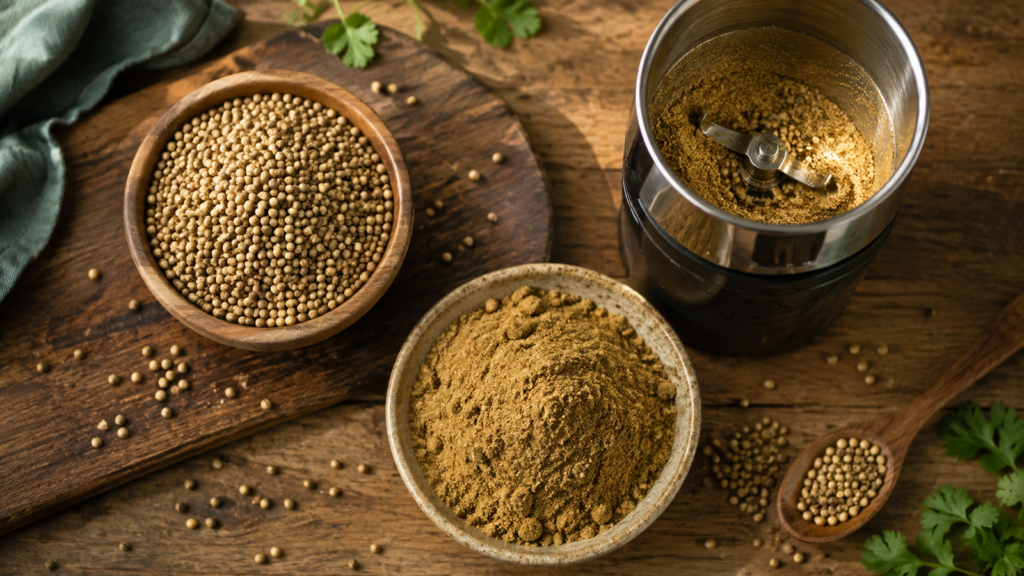
There’s something about freshly ground dhania that a months-old packet just can’t match — the aroma hits you the moment you open the jar. And the good news is, making coriander powder at home is genuinely simple. If you’ve got whole coriander seeds and a grinder, you’re most of the way there. Here’s how to do it properly.
What you’ll need
Just two things: whole coriander seeds (sabut dhania) and a grinder — a small spice grinder, a mixer jar, or even a mortar and pestle for small amounts. That’s it. If you’d like a refresher on the spice itself first, our coriander powder guide covers the basics.
Step 1: Clean and sort the seeds
Spread the coriander seeds on a plate and pick out any small stones, stems, or dust. Whole spices often carry a little field debris, and this quick step is exactly what a good spice maker does before grinding. Don’t wash them — moisture makes grinding harder and shortens shelf life.
Step 2: Dry roast (optional, but worth it)
Warm a pan on low heat and dry roast the seeds for two to three minutes, stirring constantly, until they smell fragrant and turn a shade darker. Don’t let them burn. Roasting isn’t strictly necessary, but it deepens the aroma and gives your powder a warmer, nuttier flavour. Let the seeds cool completely before grinding — grinding them warm can make the powder clump.
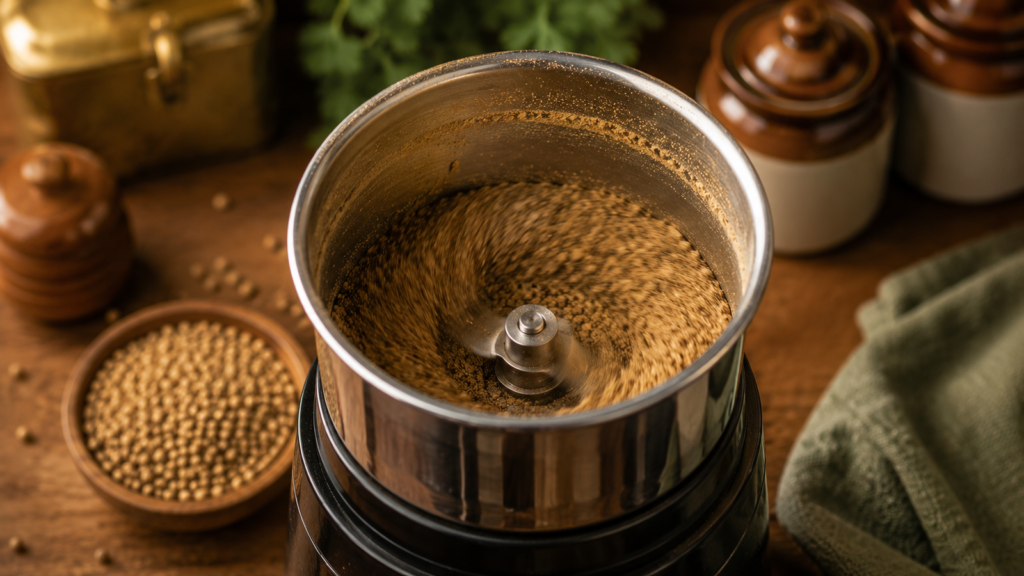
Step 3: Grind
Add the cooled seeds to your grinder and grind in short bursts. Pulsing rather than running it continuously keeps the powder from heating up, which protects the aroma. Grind to the fineness you like — a slightly coarse powder is fine for everyday cooking, finer if you want it for smooth gravies or blends.
Step 4: Sieve and store
Pass the powder through a fine sieve to catch any coarse bits, and grind those again if you like. Store the finished powder in a clean, dry, airtight container away from heat and sunlight. Make only as much as you’ll use in a few weeks — the whole point of grinding at home is freshness, so there’s no reason to make a big batch that goes dull.
Why fresh really is better
Once coriander is ground, it starts losing its aroma week by week. A whole seed can wait a year; the powder can’t. That’s the single reason freshly ground dhania tastes so much stronger than something that’s been sitting on a shelf — and why, if you’re buying rather than grinding, freshness should be the thing you look for. If you ever want to check whether a store-bought packet is the real thing, here’s how to check if your spices are pure
If you’d rather not grind it yourself
Making it at home is lovely when you have the time, but not everyone does — and grinding in tiny amounts isn’t always practical. That’s exactly the gap we fill: we grind dhania fresh in small batches at Gamak so you get that just-ground aroma without doing it yourself. Same freshness, none of the effort.
Frequently Asked Questions
Should I roast coriander seeds before grinding?It’s optional, but light dry roasting deepens the aroma and gives a warmer flavour. Just don’t burn them, and cool them fully before grinding.
How long does homemade coriander powder last?It stays usable for a few months, but it’s best within three to four weeks, when the aroma is at its peak. Make small batches for the freshest flavour.
Can I grind coriander in a regular mixer?Yes. A mixer jar works well — just grind in short bursts so the powder doesn’t heat up, and sieve out any coarse bits at the end.
Want that fresh-ground dhania aroma without the effort? Chat with us on WhatsApp for pure, freshly ground coriander powder and bulk orders.
Milawat se door, swaad se bharpoor.
-
How to Check If Your Spices Are Pure: Simple Home Tests to Spot Milawat
Most of us buy spices on trust. The packet looks bright, the price feels fair, and we assume what’s inside is what it says. But milawat — adulteration — is a real worry in Indian kitchens, and the frustrating part is you usually can’t tell just by looking. The good news: you can check a lot of it at home, with nothing more than a glass of water and your own senses. Here’s how.
Why colour tells you nothing
The first thing to unlearn is that “bright” means “good”. A deep red chilli powder or a glowing yellow haldi feels premium — but colour is the easiest thing to fake, and often the brightest powders are the ones you should trust least. Real spice colour is honest and slightly muted, not neon. So put the colour test aside and use the ones below instead.
The water test for red chilli powder
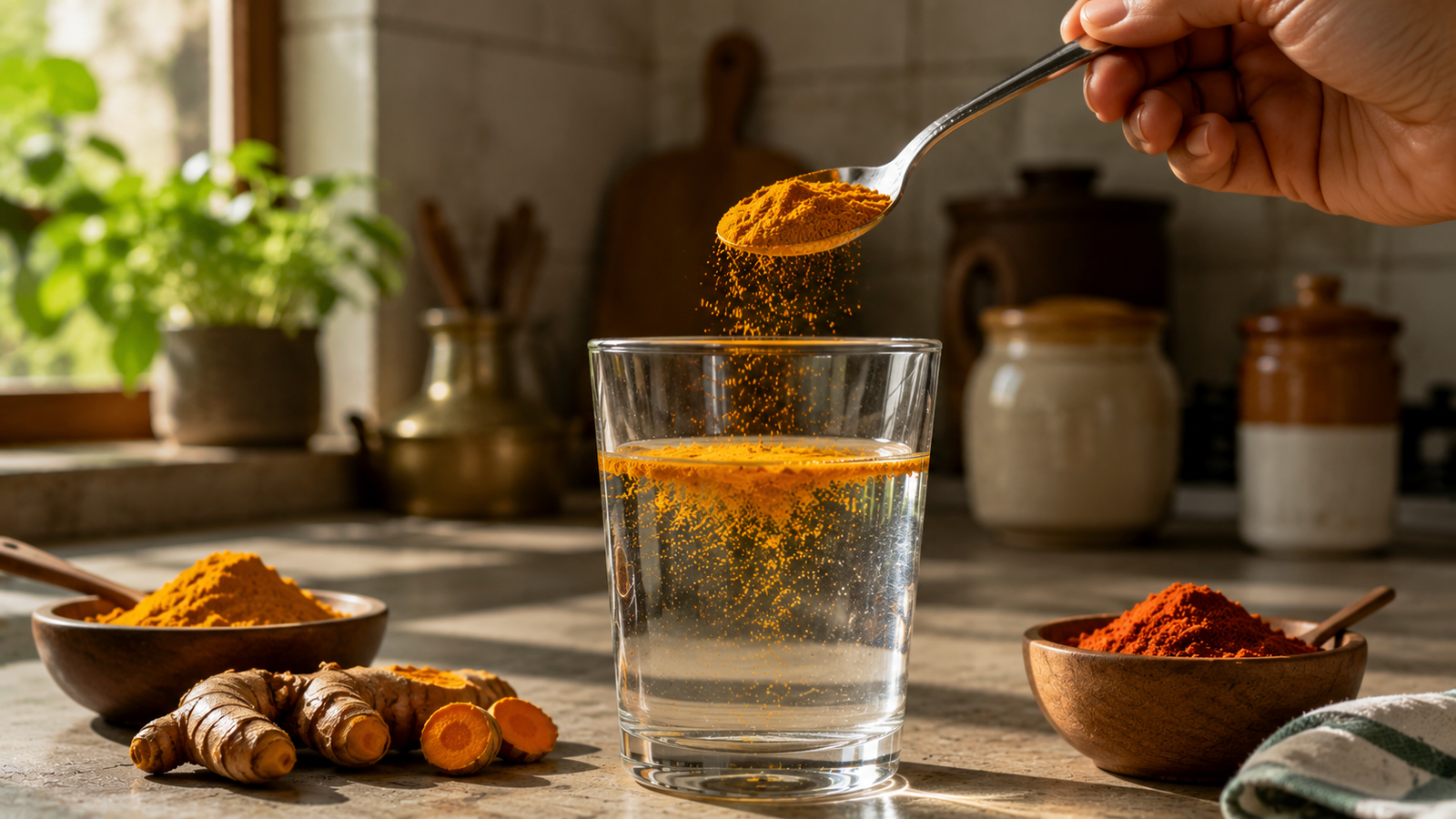
Take a glass of water and gently sprinkle a little red chilli powder on top. Pure chilli powder floats first and then slowly settles, leaving the water fairly clear. If you see colour streaking down quickly or the water turning cloudy red almost at once, that’s a reason to be cautious — real chilli doesn’t let go of its colour that easily.
The water test for haldi (turmeric)
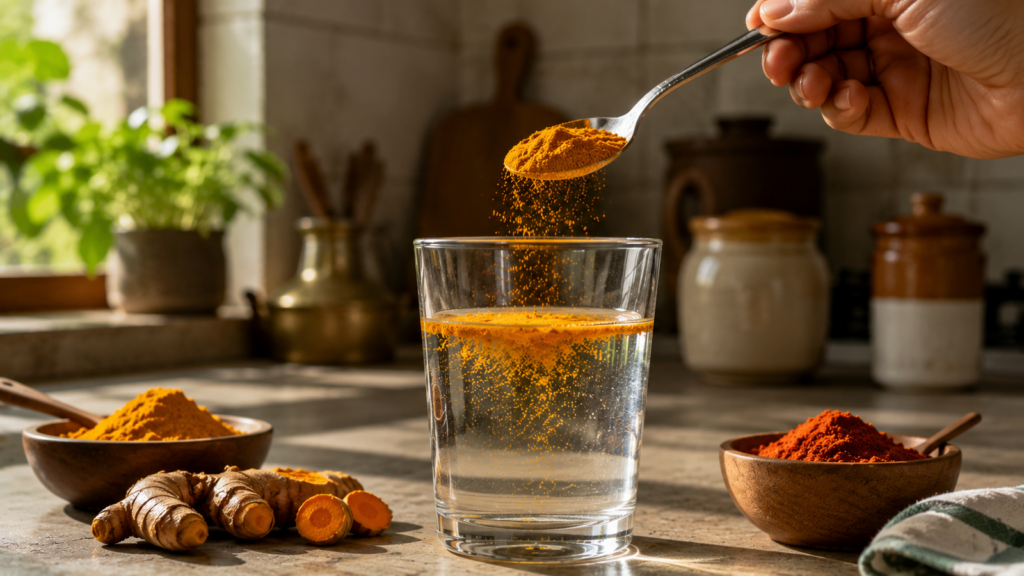
Mix a small spoon of haldi into a glass of warm water and let it sit. Pure turmeric settles at the bottom and gives the water a soft, light yellow. If the water turns a deep, harsh orange or you see a grainy residue that shouldn’t be there, treat it as a warning sign.
The rub test for dhania (coriander) powder
Dhania is often bulked up because it’s easy to stretch. Rub a pinch of coriander powder between your fingers. Real dhania feels slightly coarse and grainy, and smells warm and fresh. If it feels too fine and smooth — almost like flour — or smells flat and dusty, question it. A quick way to be sure is to buy from someone who grinds fresh, which we cover in our coriander powder guide
What pure spice should look, smell and feel like
Across every spice, the honest signs are the same:
- The smell is strong and alive the moment you open it — not flat or dusty.
- The colour is natural and slightly muted, not neon-bright.
- The texture feels real — a little coarse — not powder-fine like starch.
- It doesn’t leave odd residue or bleed colour instantly in water.
None of this needs a lab. Your nose and a glass of water do most of the work.
The real fix: buy spice that’s actually spice
Home tests are useful, but the honest truth is you shouldn’t have to test your masala at all. The reason milawat exists is that ground powder is easy to stretch and dull once it leaves sight. That’s exactly why we grind fresh in small batches at Gamak — clean whole spices, ground and packed with nothing added for colour or weight. When the spice is made honestly in the first place, the water test just confirms what you already know.
Frequently Asked Questions
How can I check if my spices are pure at home?Use simple water tests — sprinkle red chilli or mix turmeric into water and watch how the colour behaves — and trust your senses. Pure spice smells strong, feels slightly coarse, and doesn’t bleed colour instantly.
Is brightly coloured spice better?No — often the opposite. Real spice colour is natural and a little muted. Very bright, uniform colour can be a sign that something was added to catch your eye.
How do I avoid adulterated spices altogether?Buy from a source that grinds fresh and stands behind its quality, rather than loose powder of unknown origin. Freshly ground, honestly made spice is the simplest way to skip the worry.
Want spice you never have to test? Chat with us on WhatsApp for pure, freshly ground masala and bulk orders.
Milawat se door, swaad se bharpoor.
-
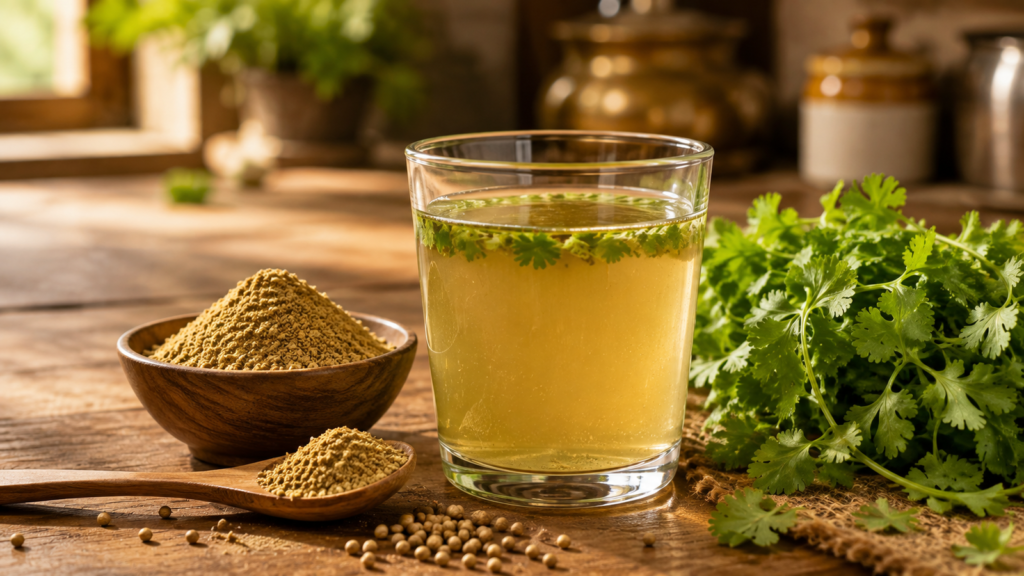
Health Benefits of Coriander Powder (Dhania) You Should Know
Coriander powder — dhania — sits in almost every Indian kitchen, used so casually that most of us never think of it as anything more than flavour. But this humble everyday spice has quietly been valued for generations, and not just for taste. Here’s a simple, no-hype look at what coriander powder is actually believed to do for you.
First, a quick reminder of what it is
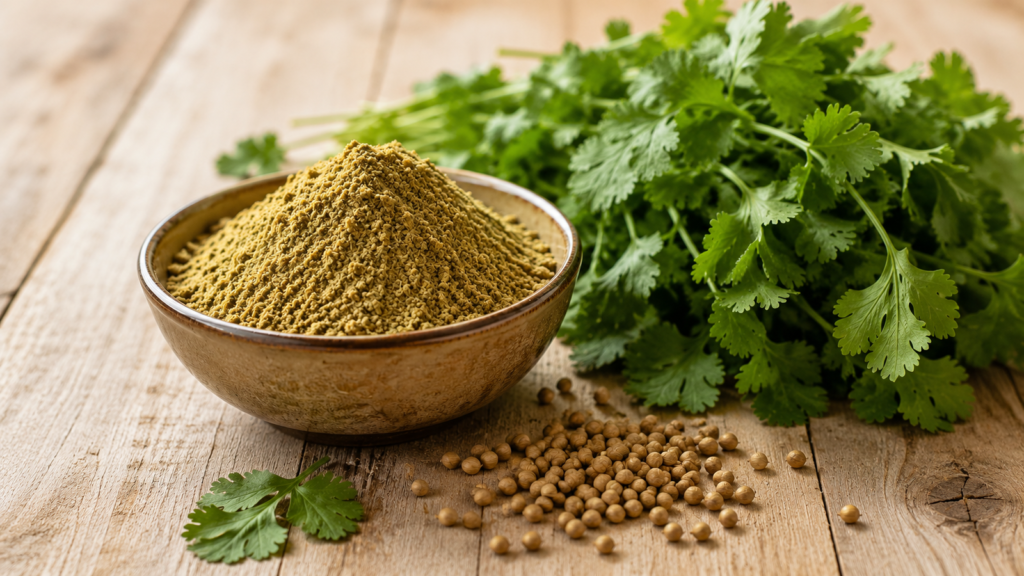
Coriander powder is just whole coriander seeds, dried and ground into a fine powder. We’ve covered it fully in our coriander powder guide The one thing that matters for benefits: most of the good stuff — the natural oils and aroma — lives in a freshly ground powder, and slowly fades as it sits.
It’s gentle on digestion
This is the most well-known reason dhania has a permanent spot in Indian kitchens — it’s easy on the stomach. It’s traditionally used to settle digestion, ease bloating, and calm a heavy meal. That’s partly why so many everyday gravies lean on it: it adds flavour without adding heat, and sits light.
It has a cooling effect
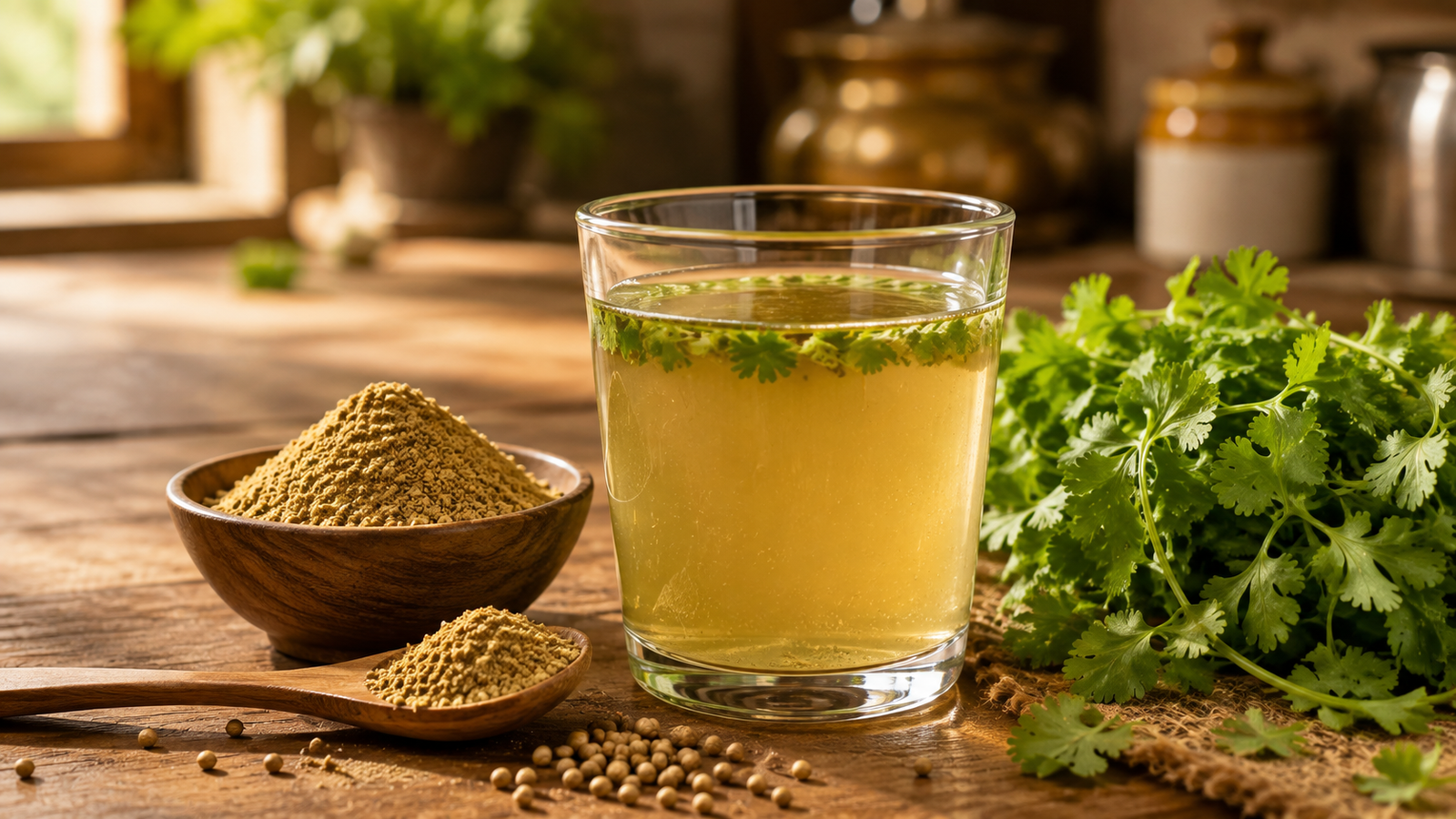
In Indian homes, dhania is considered a “cooling” spice. Dhania water — coriander soaked in water overnight — is a common summer home remedy for exactly this reason. The powder carries the same reputation, which is why it shows up so often in everyday cooking through the hotter months.
It’s naturally rich in antioxidants
Coriander contains natural antioxidant compounds — simply the things that help your body deal with everyday wear and tear. You’re never eating dhania in huge amounts, but a little in your daily food, day after day, quietly adds up.
It may help with everyday balance
Some studies suggest coriander can support healthy blood sugar and digestion as part of a normal diet. It’s not a treatment or a cure for anything — but it’s one more small, honest reason this everyday spice earns its place in your dabba.
It’s long been used for skin, traditionally
Dhania has a long history in home remedies for clearer, calmer skin. Nothing miraculous — but it’s part of why coriander turns up in so many traditional recipes and gharelu nuskhe passed down over the years.
How to actually get these benefits
Here’s the honest part: these benefits only matter if the spice is actually spice. A packet that’s mostly filler, or dulled by months of sitting, gives you the goodness on paper but not much on your plate. That’s exactly why freshly ground, unadulterated dhania matters — and why we grind ours fresh in small batches at Gamak If you want to be sure what you’re buying is the real thing, here’s how to check if your dhania powder is pure
Frequently Asked Questions
Can I eat coriander powder every day?Yes. It’s used daily in Indian cooking in small amounts, and that’s exactly how its benefits add up over time.
Is coriander powder good for health?Yes — as part of a normal diet, it’s a wholesome everyday spice that’s traditionally valued for digestion and its cooling nature. It’s not a medicine, just good, honest food.
Is dhania water better than coriander powder?They’re both coriander, just used differently. Dhania water is a light home remedy; the powder is your everyday cooking spice. You don’t have to choose — most homes use both.
If you want dhania powder that actually delivers on all this — fresh, clean, and full of aroma — chat with us on WhatsApp . Pure masala, bulk orders, no fuss.
Milawat se door, swaad se bharpoor.
-
Coriander Powder (Dhania Powder): What It Really Is, and How to Use It

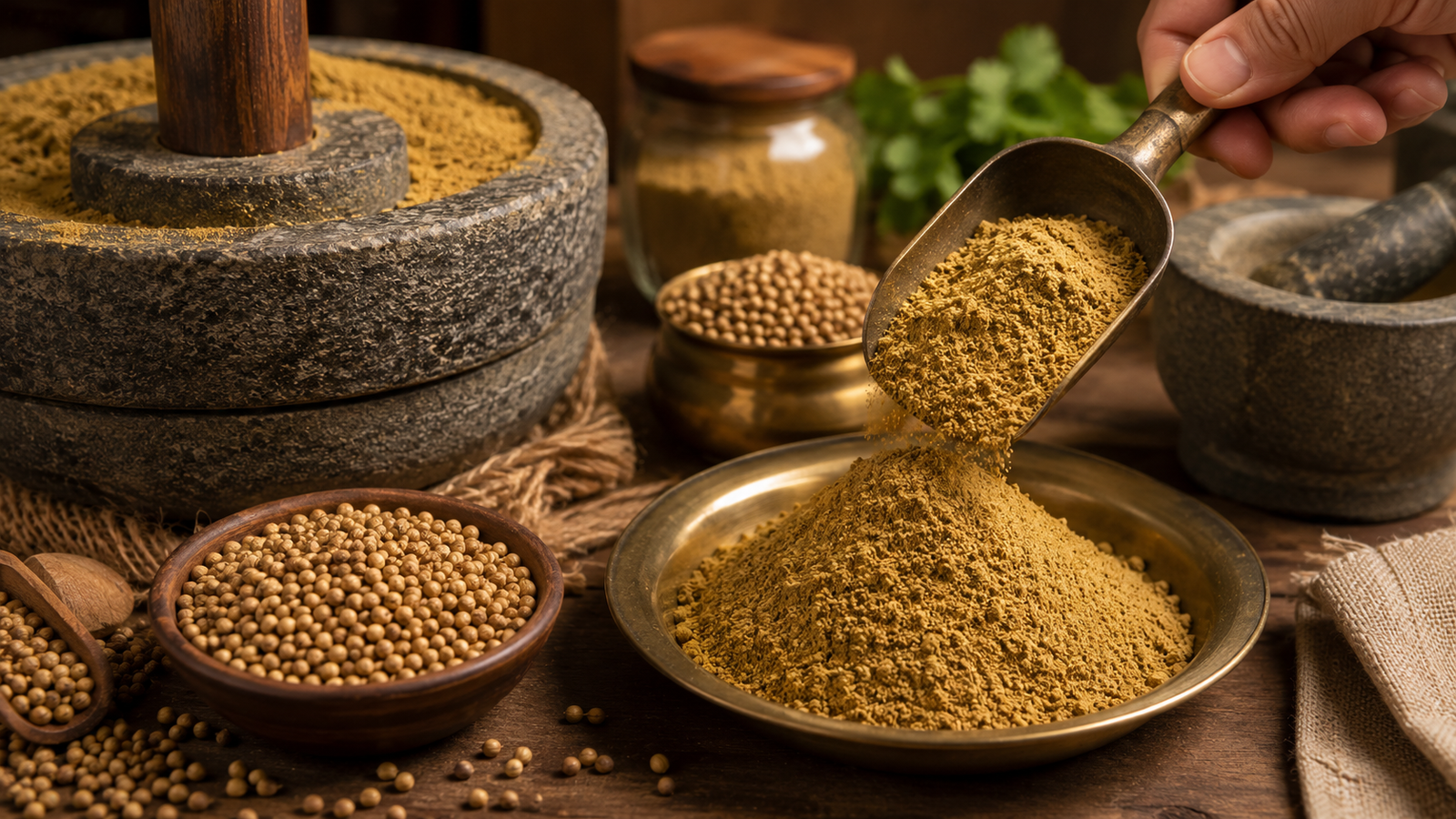
If you cook Indian food, you’ve used coriander powder more times than you can count — it’s in almost every gravy, every sabzi, every homemade masala. But most of us never really stop to think about what it is, or why one packet tastes of something and another tastes of almost nothing. So let’s clear that up, simply.
What is coriander powder (dhania powder)?
Coriander powder is nothing complicated. It’s just whole coriander seeds, dried and ground into a fine powder. In Hindi we call it dhania powder, and “coriander” is simply its English name — so if a recipe says coriander powder and your dabba says dhania, relax, they’re the same thing.
What makes it special is how gentle it is. It’s mild, warm, a little citrusy, and it never overpowers a dish. That’s exactly why it’s used as a base spice — it quietly holds everything else together instead of shouting over it.
Coriander seeds vs coriander powder
Here’s something worth knowing: a whole coriander seed keeps all its aroma locked inside until the moment it’s ground. Crush it, and the natural oils wake up — which is why freshly ground dhania smells so much stronger than a powder that’s been sitting on a shelf for months.
That’s really the whole story behind freshness. A seed can wait a year and be perfectly fine. A powder can’t — the day it’s ground, the clock starts ticking on its flavour.
How coriander powder is made
The honest way to make it is boring, and that’s the point: clean the whole seeds, pick out the stones and dust, grind them in small batches, and pack them fresh. Nothing needs to be added anywhere along the way — no colour, no filler, nothing.
That’s how we do it at Gamak small batches, ground fresh, so the aroma actually survives the trip to your kitchen.
How to use coriander powder in everyday cooking
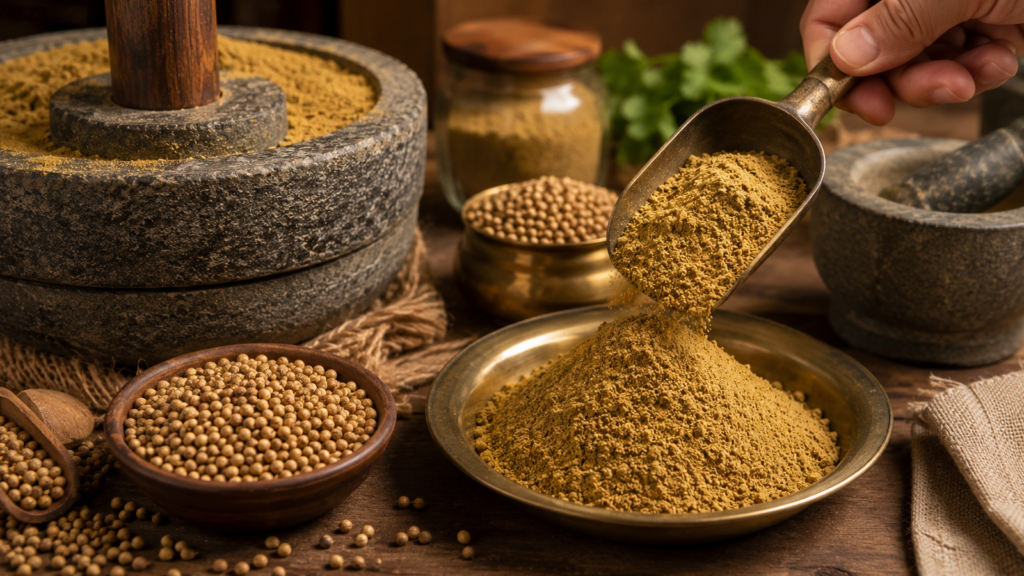
Coriander powder is a bit of an all-rounder. It goes into gravies early, along with the onion and tomato, to build a base. It brings quiet warmth to a dry sabzi without adding heat. It rounds off dals and marinades. And it’s a backbone ingredient in almost any masala you grind at home. If you want the actual recipes and quantities, we’ve written a full guide on how to use coriander powder in cooking
The benefits of coriander powder
Dhania isn’t just about flavour. In Indian homes it’s long been trusted for digestion and its cooling nature — a small, everyday spice that quietly does more than you’d expect. We’ve gone deep into the health benefits of coriander powder in a separate post if you’re curious.
How to tell if your dhania powder is pure
Not every coriander powder is the same. Some is bulked up, some is just old and dull, and the sad part is you often can’t tell just by looking at the packet. But you usually can tell at home — from the colour, the smell, and how it feels between your fingers. We’ve put together a simple guide on how to check if your dhania powder is pure
How to store coriander powder
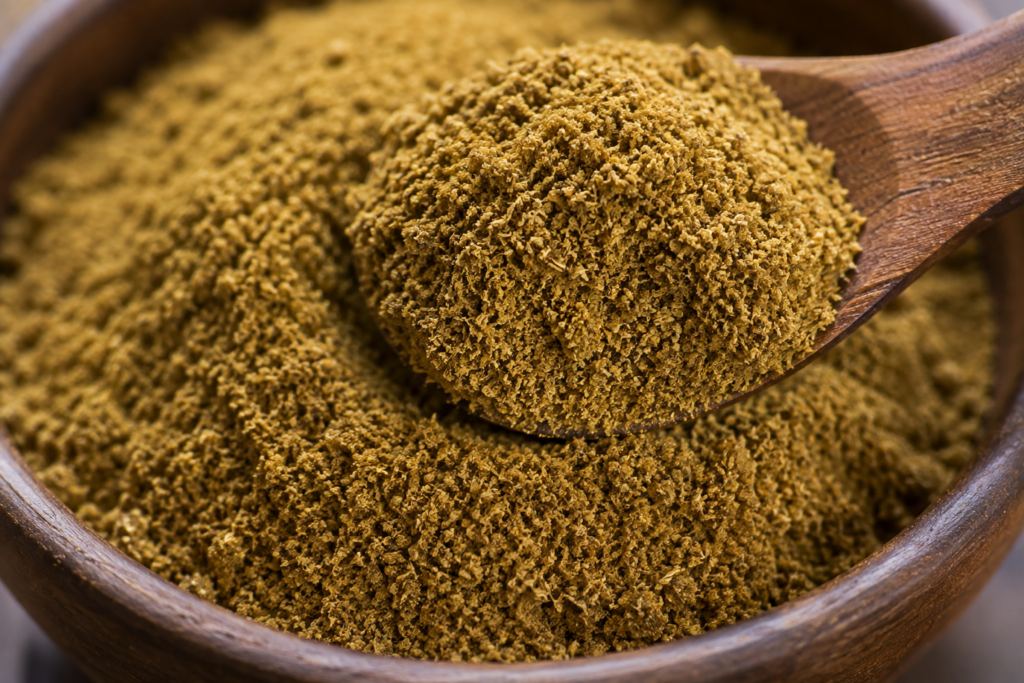
Keep it in an airtight container, away from heat and sunlight, and don’t buy more than you’ll use in a few weeks. Ground spice rewards you for using it fresh and punishes you for hoarding it — the flavour just quietly fades once the packet has been open a while.
Frequently Asked Questions
Is dhania powder and coriander powder the same?Yes — dhania is the Hindi name, coriander is the English one. Same spice.
Is coriander powder made from seeds or leaves?From the dried seeds, not the fresh green leaves (that green stuff is dhania patta).
Does coriander powder go bad?It won’t spoil quickly, but it slowly loses its aroma once ground — so fresher is always better.
If you’re after dhania powder that actually smells like something — for your kitchen or your shop — chat with us on WhatsApp. Pure masala, bulk orders, no fuss.
Milawat se door, swaad se bharpoor.