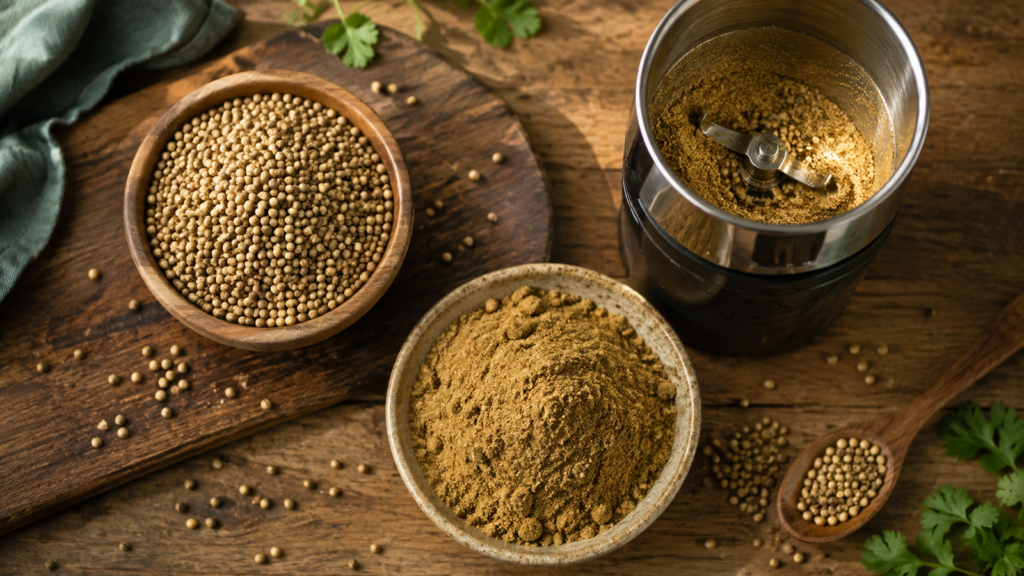
Category: Recipes & Cooking

Everyday recipes and cooking tips that make the most of fresh, pure spices — how to use each spice, quantities, and simple kitchen ideas.

  • How to Use Coriander Powder in Everyday Cooking

    how to use coriander powder in cooking added to masala base.

    Coriander powder — dhania — is one of those spices almost every Indian dish quietly leans on. But because it’s so common, most of us just throw it in without thinking about when or how much. Used well, it does a lot; used carelessly, it disappears. Here’s how to actually get the most out of it.

    Where coriander powder fits in a dish

    Coriander powder is a base spice, not a finishing one. It’s meant to be cooked into the dish early, along with the masala, so its warm, mild flavour spreads through everything rather than sitting on top. If you’ve ever added it right at the end and wondered why it tasted raw and dusty, that’s why — it needs heat and time to open up.

    If you’re not sure what coriander powder actually is to begin with, our coriander powder guide covers the basics.

    Everyday ways to use it

    • In gravies: add it to the onion-tomato base and let it cook for a minute or two before the water goes in.
    • In dry sabzis: a spoon along with the tadka gives warmth without heat.
    • In dals: a small amount while it simmers rounds off the flavour.
    • In marinades: mixed with curd, it adds body to paneer, vegetables, or non-veg.
    • In snacks and chaats: a pinch of roasted coriander powder lifts the whole thing.
    how much coriander powder to use in cooking.

    How much to use

    Coriander powder is forgiving, but balance matters. For most dishes serving three to four people, half a teaspoon to a full teaspoon is plenty. Because it’s mild, it’s often used in slightly larger amounts than sharper spices — it builds a base rather than a punch. When in doubt, start light; you can always add more, but you can’t take it out.

    A simple tip: let it cook

    The single biggest thing people get wrong is not cooking it long enough. Give coriander powder at least a minute in hot oil or masala before adding liquid. This small step turns it from a dusty raw taste into a warm, rounded flavour. Some cooks also lightly roast coriander seeds and grind them fresh for an even deeper aroma.

    Coriander powder in homemade blends

    Coriander is a backbone of most homemade masalas — garam masala, sambhar powder, chaat masala and more all rely on it to hold the sharper spices together. If you grind your own blends, a good, fresh coriander powder makes a noticeable difference to the final result.

    Freshness makes the difference

    All of this only works if the powder actually has flavour. A dull, old, or stretched packet gives you the colour and none of the warmth. This is why freshly ground dhania matters — and why we grind ours in small batches at Gamak, so it still smells alive when it reaches your kitchen.

    Frequently Asked Questions

    When should I add coriander powder while cooking?

    Early — with the masala base — so it cooks into the dish. Adding it at the very end leaves a raw, dusty taste.

    How much coriander powder should I use?

    About half to one teaspoon for a dish serving three to four people. It’s mild, so it’s usually used a little more generously than sharper spices.

    Can I use coriander powder instead of coriander seeds?

    Yes, in most cooked dishes. The powder blends in faster; seeds are better when you want texture or a tempering. You can also grind seeds fresh for a stronger aroma.


    Want dhania powder that actually adds flavour, not just colour? Chat with us on WhatsApp for pure, freshly ground masala.

    Milawat se door, swaad se bharpoor.
  • How to Make Coriander Powder (Dhania) at Home

    How to Make Coriander Powder (Dhania) at Home

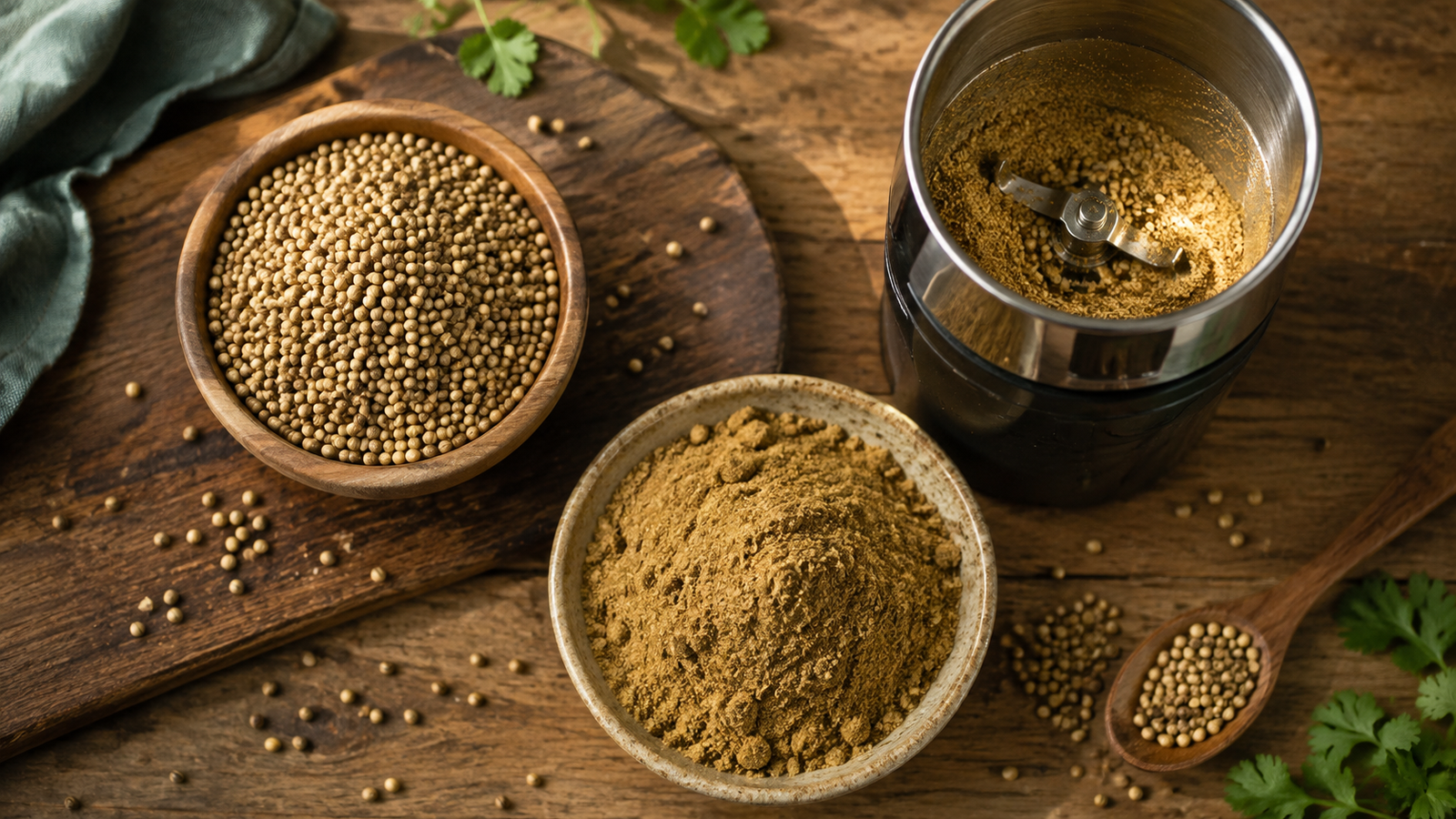
    how to make coriander powder at home from whole coriander seeds.

    There’s something about freshly ground dhania that a months-old packet just can’t match — the aroma hits you the moment you open the jar. And the good news is, making coriander powder at home is genuinely simple. If you’ve got whole coriander seeds and a grinder, you’re most of the way there. Here’s how to do it properly.

    What you’ll need

    Just two things: whole coriander seeds (sabut dhania) and a grinder — a small spice grinder, a mixer jar, or even a mortar and pestle for small amounts. That’s it. If you’d like a refresher on the spice itself first, our coriander powder guide covers the basics.

    Step 1: Clean and sort the seeds

    Spread the coriander seeds on a plate and pick out any small stones, stems, or dust. Whole spices often carry a little field debris, and this quick step is exactly what a good spice maker does before grinding. Don’t wash them — moisture makes grinding harder and shortens shelf life.

    Step 2: Dry roast (optional, but worth it)

    Warm a pan on low heat and dry roast the seeds for two to three minutes, stirring constantly, until they smell fragrant and turn a shade darker. Don’t let them burn. Roasting isn’t strictly necessary, but it deepens the aroma and gives your powder a warmer, nuttier flavour. Let the seeds cool completely before grinding — grinding them warm can make the powder clump.

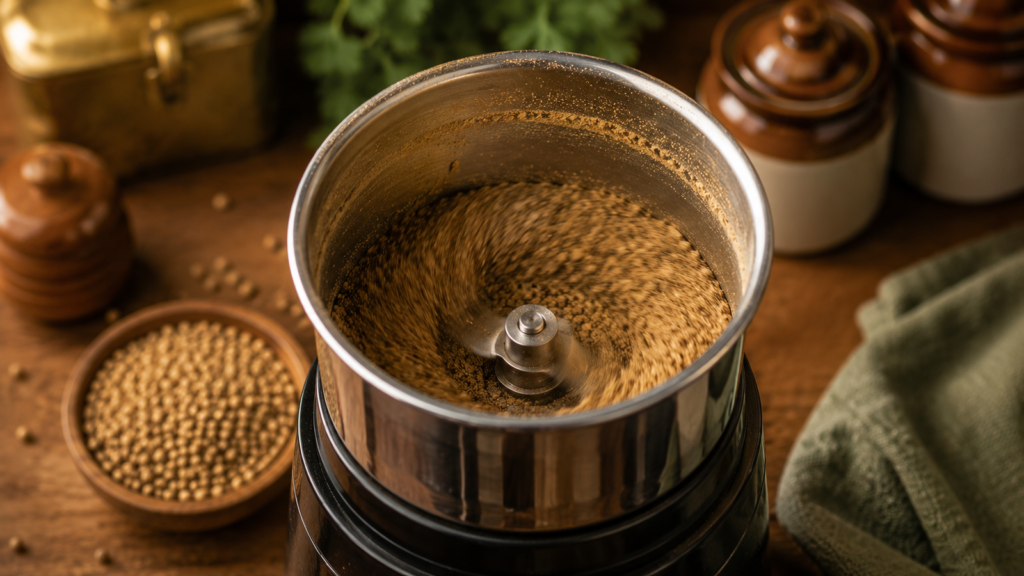
    grinding coriander seeds into fresh dhania powder.

    Step 3: Grind

    Add the cooled seeds to your grinder and grind in short bursts. Pulsing rather than running it continuously keeps the powder from heating up, which protects the aroma. Grind to the fineness you like — a slightly coarse powder is fine for everyday cooking, finer if you want it for smooth gravies or blends.

    Step 4: Sieve and store

    Pass the powder through a fine sieve to catch any coarse bits, and grind those again if you like. Store the finished powder in a clean, dry, airtight container away from heat and sunlight. Make only as much as you’ll use in a few weeks — the whole point of grinding at home is freshness, so there’s no reason to make a big batch that goes dull.

    Why fresh really is better

    Once coriander is ground, it starts losing its aroma week by week. A whole seed can wait a year; the powder can’t. That’s the single reason freshly ground dhania tastes so much stronger than something that’s been sitting on a shelf — and why, if you’re buying rather than grinding, freshness should be the thing you look for. If you ever want to check whether a store-bought packet is the real thing, here’s how to check if your spices are pure

    If you’d rather not grind it yourself

    Making it at home is lovely when you have the time, but not everyone does — and grinding in tiny amounts isn’t always practical. That’s exactly the gap we fill: we grind dhania fresh in small batches at Gamak so you get that just-ground aroma without doing it yourself. Same freshness, none of the effort.

    Frequently Asked Questions

    Should I roast coriander seeds before grinding?

    It’s optional, but light dry roasting deepens the aroma and gives a warmer flavour. Just don’t burn them, and cool them fully before grinding.

    How long does homemade coriander powder last?

    It stays usable for a few months, but it’s best within three to four weeks, when the aroma is at its peak. Make small batches for the freshest flavour.

    Can I grind coriander in a regular mixer?

    Yes. A mixer jar works well — just grind in short bursts so the powder doesn’t heat up, and sieve out any coarse bits at the end.


    Want that fresh-ground dhania aroma without the effort? Chat with us on WhatsApp for pure, freshly ground coriander powder and bulk orders.

    Milawat se door, swaad se bharpoor.