Category: Spice Guides

Simple, complete guides to Indian spices — what they are, their English and Hindi names, uses and how they’re made. Everything you need to understand your masala better.

  • Haldi Powder (Turmeric): Meaning, Uses, Benefits & Complete Guide

    haldi powder turmeric with fresh turmeric roots.

    Haldi is probably the most Indian spice there is. It’s in almost every sabzi and dal, it turns up in home remedies, in haldi doodh, even in weddings. Yet for something we use every single day, most of us have never really thought about what haldi powder is or what separates a good one from a dull, lifeless packet. Here’s a simple, complete guide.

    What is haldi powder (turmeric)?

    Haldi powder is dried turmeric root, ground into a fine powder. “Haldi” is the Hindi name and “turmeric” is the English one — so if a recipe says turmeric powder and your dabba says haldi, they’re the same thing. It gives food its warm golden colour and an earthy, slightly bitter flavour that sits underneath almost every Indian dish.

    The colour comes from a natural compound called curcumin, which is also the reason turmeric is so valued beyond the kitchen. In a good haldi, that colour is deep but natural — never neon.

    How haldi powder is made

    The honest process is simple: clean, dried turmeric roots are sorted, then ground into a fine powder and packed. Nothing needs to be added for colour or weight. Because turmeric’s aroma and its natural oils sit inside the root, freshly ground haldi is far richer than a powder that’s been sitting on a shelf for months. This is the same reason we grind fresh in small batches at Gamak — so the colour and warmth reach your kitchen the way they should.

    haldi doodh turmeric milk made with pure haldi powder

    How to use haldi in cooking

    Haldi is a base spice, added early so it can cook into the dish rather than sit on top of it. A few everyday uses:

    • Added to hot oil or the onion-tomato base at the start of a sabzi or gravy.
    • A pinch in dal while it boils, for colour and warmth.
    • In marinades for vegetables, paneer, or non-veg, where it also helps with smell.
    • Just a small amount is enough — too much turns a dish bitter, so haldi is about restraint.

    Haldi beyond the kitchen

    This is where haldi is different from most spices. For generations it’s been part of Indian home life well outside cooking — haldi doodh at night, haldi in skincare and ubtan, and its place in traditional remedies. None of this is magic, but it’s why haldi holds a spot in Indian homes that few other spices do.

    The health side of haldi

    Turmeric’s curcumin has been studied for its antioxidant and anti-inflammatory properties, and haldi has long been valued in Indian households for exactly these reasons. It’s not a medicine and it’s not a cure — it’s simply a wholesome everyday spice that quietly does more than add colour. We’ve covered this in detail in our health benefits of haldi post.

    How to tell if your haldi is pure

    Haldi is one of the more commonly adulterated spices, usually with cheaper powders or added colour to make it look brighter. The good news is you can check at home — a simple turmeric-in-water test tells you a lot. We’ve laid out the easy home tests here: how to check if your haldi is pure

    The short version: real haldi is a natural, slightly muted gold — not a harsh, glowing orange — and it settles softly in water instead of bleeding colour instantly.

    How to store haldi powder

    Keep it in an airtight container, away from heat, moisture, and direct sunlight, and buy in amounts you’ll finish in a few weeks. Ground turmeric holds its colour longer than its aroma, so fresher is always better if you want the full flavour, not just the colour.

    Frequently Asked Questions

    Is haldi and turmeric the same thing?

    Yes — haldi is the Hindi name and turmeric is the English name for the same spice, made from dried turmeric root.

    Is haldi powder made from a root or a seed?

    From the dried root (rhizome) of the turmeric plant, ground into powder — not a seed.

    Why is some haldi brighter than others?

    Natural haldi has a deep but muted gold colour. A very bright, uniform orange can be a sign that colour was added, so brighter isn’t better.

    How much haldi should I use in cooking?

    Just a small pinch to half a teaspoon for most dishes. Too much makes food bitter — haldi works best in restraint.


    Want haldi that’s a natural gold, not a fake glow — freshly ground and honestly made? Chat with us on WhatsApp for pure haldi and bulk orders.

    Milawat se door, swaad se bharpoor.

  • Coriander Powder vs Coriander Seeds: What’s the Difference?

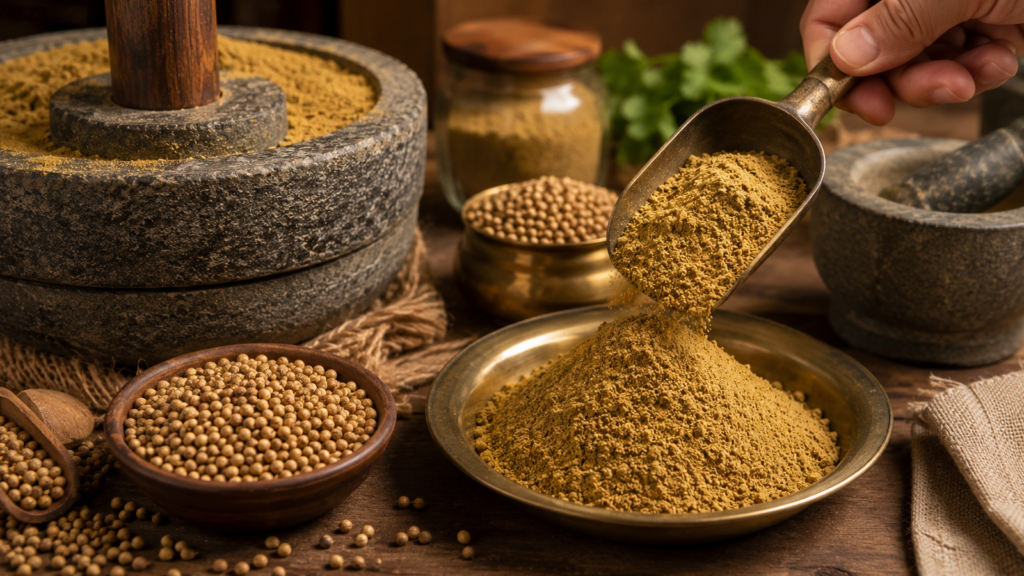
    coriander powder vs coriander seeds side by side comparison.

    Coriander shows up in an Indian kitchen in two forms — whole seeds (sabut dhania) and the ground powder (dhania powder). They come from the same plant, but they behave differently in cooking, and knowing when to use which makes a real difference. Here’s the simple version.

    The basic difference

    Coriander seeds are the whole, dried seeds of the coriander plant. Coriander powder is just those same seeds, ground fine. That’s the only real difference in what they are — everything else comes down to how that changes their flavour and how you use them. For a full breakdown of the spice itself, see our coriander powder guide

    The flavour and aroma difference

    This is the part that matters. A whole coriander seed keeps its aroma locked inside, protected, until it’s crushed or ground. The moment you grind it, the natural oils release — which is why fresh powder smells strong and a whole seed smells mild until you break it.

    So seeds hold their flavour longer, and powder delivers it faster. Neither is “better” — they’re just built for different jobs.

    whole coriander seeds tempered in oil for tadka.

    When to use whole coriander seeds

    Reach for whole seeds when you want texture or a slow release of flavour:

    • In a tadka or tempering, where they crackle in hot oil and release aroma gradually.
    • In slow-cooked dishes and pickles, where they can sit and infuse over time.
    • Lightly dry-roasted and then coarsely crushed, for a deeper, nuttier flavour.

    When to use coriander powder

    Reach for the powder when you want the flavour to blend in evenly and quickly:

    • In everyday gravies and sabzis, added with the masala base.
    • In marinades, where it mixes smoothly into curd or paste.
    • In spice blends and masalas, where a fine, even texture matters.

    If you want the full detail on this, we’ve written a separate post on how to use coriander powder in cooking

    Freshness: why powder needs more care

    Here’s the trade-off. Whole seeds can sit in your dabba for a year and stay fine, because their aroma is still sealed inside. Powder can’t — once ground, it slowly loses its flavour with every passing week. That’s why the freshness of your coriander powder matters far more than the freshness of your seeds, and why freshly ground dhania — like the small batches we grind at Gamak — tastes so much stronger than an old packet.

    Can you swap one for the other?

    Yes, with a little sense. If a recipe calls for powder and you only have seeds, dry-roast the seeds lightly and grind them fresh — you’ll actually get a better result. Going the other way, powder can stand in for seeds in most cooked dishes, though you’ll lose the texture and the slow tempering effect.

    Frequently Asked Questions

    Are coriander seeds and coriander powder the same?

    They come from the same plant — powder is simply ground coriander seeds. The difference is in texture, aroma, and how you use them.

    Which lasts longer, coriander seeds or powder?

    Whole seeds last much longer because their aroma stays sealed inside. Ground powder slowly loses its flavour, so it’s best used fresh.

    Can I grind coriander seeds into powder at home?

    Yes — lightly dry-roast the seeds, then grind them fresh. This gives a stronger aroma than a packet that’s been sitting for months.


    Want the convenience of powder without losing the aroma of fresh seeds? Chat with us on WhatsApp ← for freshly ground dhania and bulk orders.

    Milawat se door, swaad se bharpoor.

  • Coriander Powder (Dhania Powder): What It Really Is, and How to Use It

    Coriander Powder (Dhania Powder): What It Really Is, and How to Use It

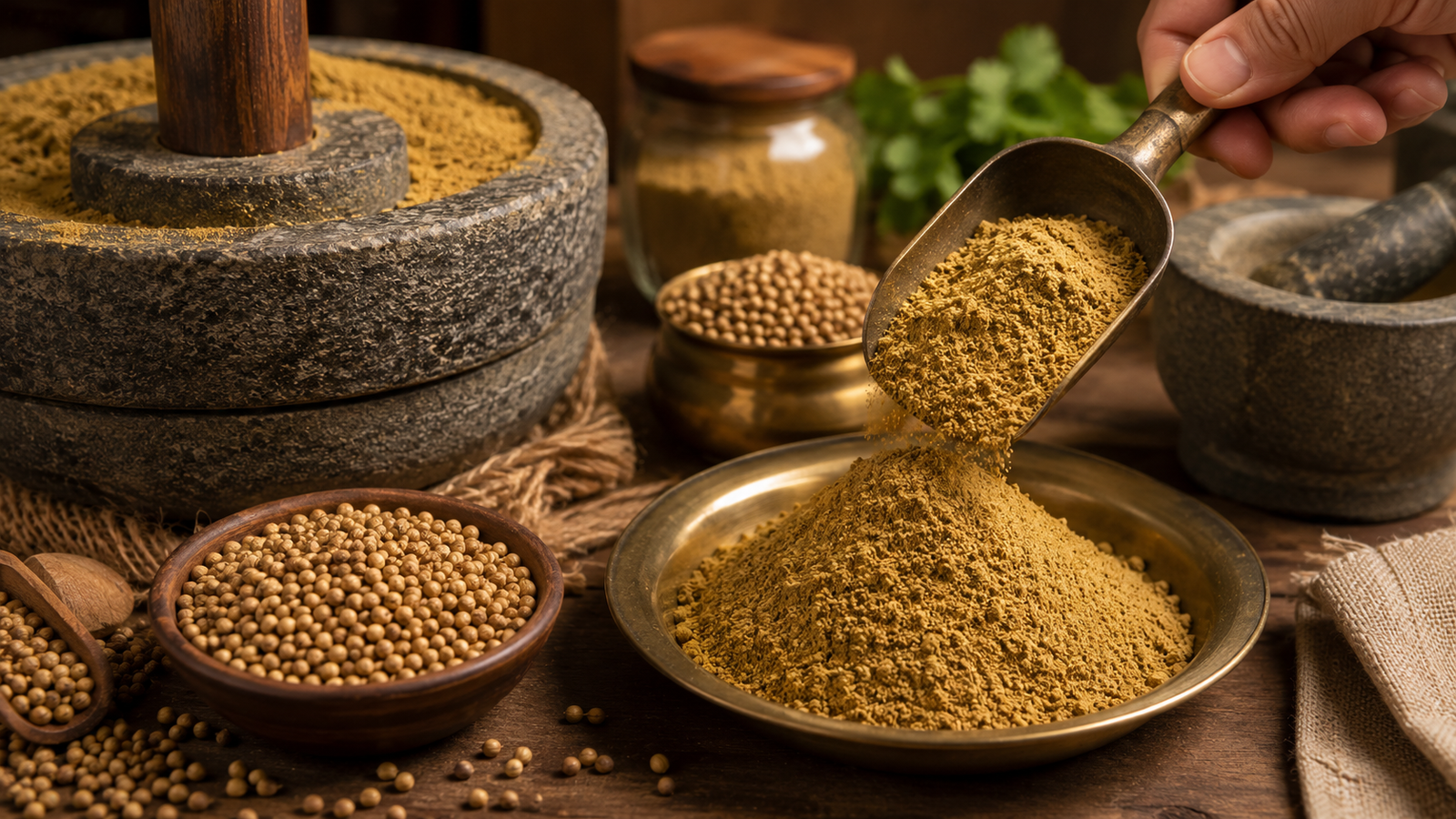
    coriander powder (dhania powder) in a bowl with coriander seeds

    If you cook Indian food, you’ve used coriander powder more times than you can count — it’s in almost every gravy, every sabzi, every homemade masala. But most of us never really stop to think about what it is, or why one packet tastes of something and another tastes of almost nothing. So let’s clear that up, simply.

    What is coriander powder (dhania powder)?

    Coriander powder is nothing complicated. It’s just whole coriander seeds, dried and ground into a fine powder. In Hindi we call it dhania powder, and “coriander” is simply its English name — so if a recipe says coriander powder and your dabba says dhania, relax, they’re the same thing.

    What makes it special is how gentle it is. It’s mild, warm, a little citrusy, and it never overpowers a dish. That’s exactly why it’s used as a base spice — it quietly holds everything else together instead of shouting over it.

    Coriander seeds vs coriander powder

    Here’s something worth knowing: a whole coriander seed keeps all its aroma locked inside until the moment it’s ground. Crush it, and the natural oils wake up — which is why freshly ground dhania smells so much stronger than a powder that’s been sitting on a shelf for months.

    That’s really the whole story behind freshness. A seed can wait a year and be perfectly fine. A powder can’t — the day it’s ground, the clock starts ticking on its flavour.

    How coriander powder is made

    The honest way to make it is boring, and that’s the point: clean the whole seeds, pick out the stones and dust, grind them in small batches, and pack them fresh. Nothing needs to be added anywhere along the way — no colour, no filler, nothing.

    That’s how we do it at Gamak small batches, ground fresh, so the aroma actually survives the trip to your kitchen.

    freshly ground dhania powder being packed

    How to use coriander powder in everyday cooking

    Coriander powder is a bit of an all-rounder. It goes into gravies early, along with the onion and tomato, to build a base. It brings quiet warmth to a dry sabzi without adding heat. It rounds off dals and marinades. And it’s a backbone ingredient in almost any masala you grind at home. If you want the actual recipes and quantities, we’ve written a full guide on how to use coriander powder in cooking

    The benefits of coriander powder

    Dhania isn’t just about flavour. In Indian homes it’s long been trusted for digestion and its cooling nature — a small, everyday spice that quietly does more than you’d expect. We’ve gone deep into the health benefits of coriander powder in a separate post if you’re curious.

    How to tell if your dhania powder is pure

    Not every coriander powder is the same. Some is bulked up, some is just old and dull, and the sad part is you often can’t tell just by looking at the packet. But you usually can tell at home — from the colour, the smell, and how it feels between your fingers. We’ve put together a simple guide on how to check if your dhania powder is pure

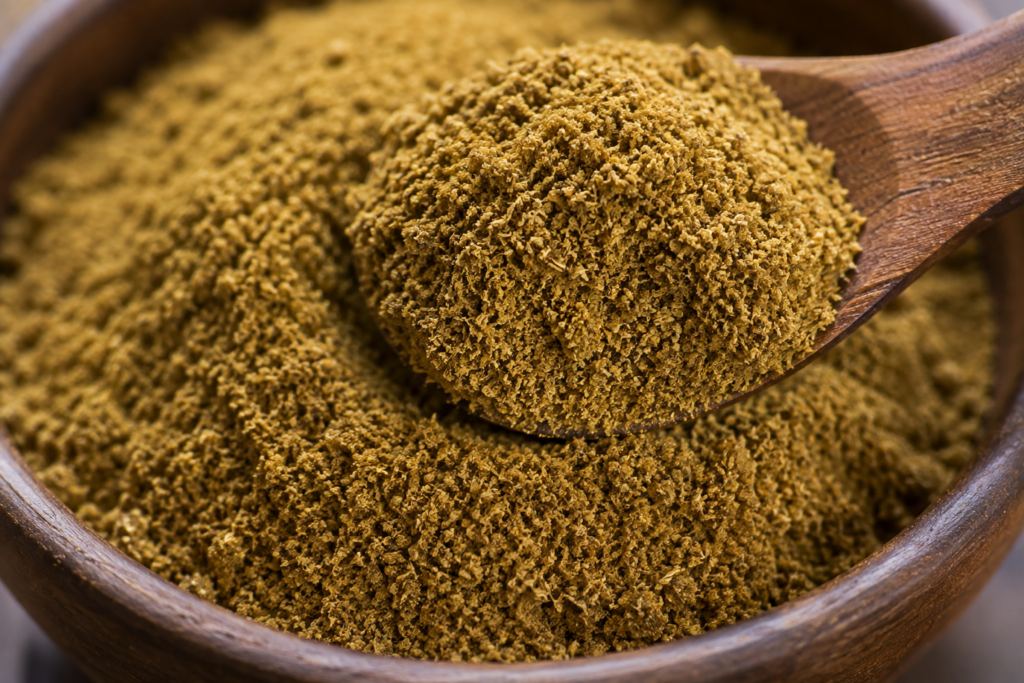
    pure dhania powder colour and texture close up

    How to store coriander powder

    Keep it in an airtight container, away from heat and sunlight, and don’t buy more than you’ll use in a few weeks. Ground spice rewards you for using it fresh and punishes you for hoarding it — the flavour just quietly fades once the packet has been open a while.

    Frequently Asked Questions

    Is dhania powder and coriander powder the same?

    Yes — dhania is the Hindi name, coriander is the English one. Same spice.

    Is coriander powder made from seeds or leaves?

    From the dried seeds, not the fresh green leaves (that green stuff is dhania patta).

    Does coriander powder go bad?

    It won’t spoil quickly, but it slowly loses its aroma once ground — so fresher is always better.


    If you’re after dhania powder that actually smells like something — for your kitchen or your shop — chat with us on WhatsApp. Pure masala, bulk orders, no fuss.

    Milawat se door, swaad se bharpoor.